Mike's Metalworking
Mike's Corinthian Bronze
Mike's Corinthian Bronze
Couldn't load pickup availability
Corinthian Bronze is a famed and rare material from antiquity, highly coveted by craftsmen all over ancient Greece during the bronze age. Scholars know this material was mostly copper alloy, but as for the exact percentages of other metals, it is not known with any certainty. Based on first-hand reports of the color of the metal along with some surviving texts, the original alloy was mostly copper, with additions of both silver and gold in quantities above 5% and below 15% of each.
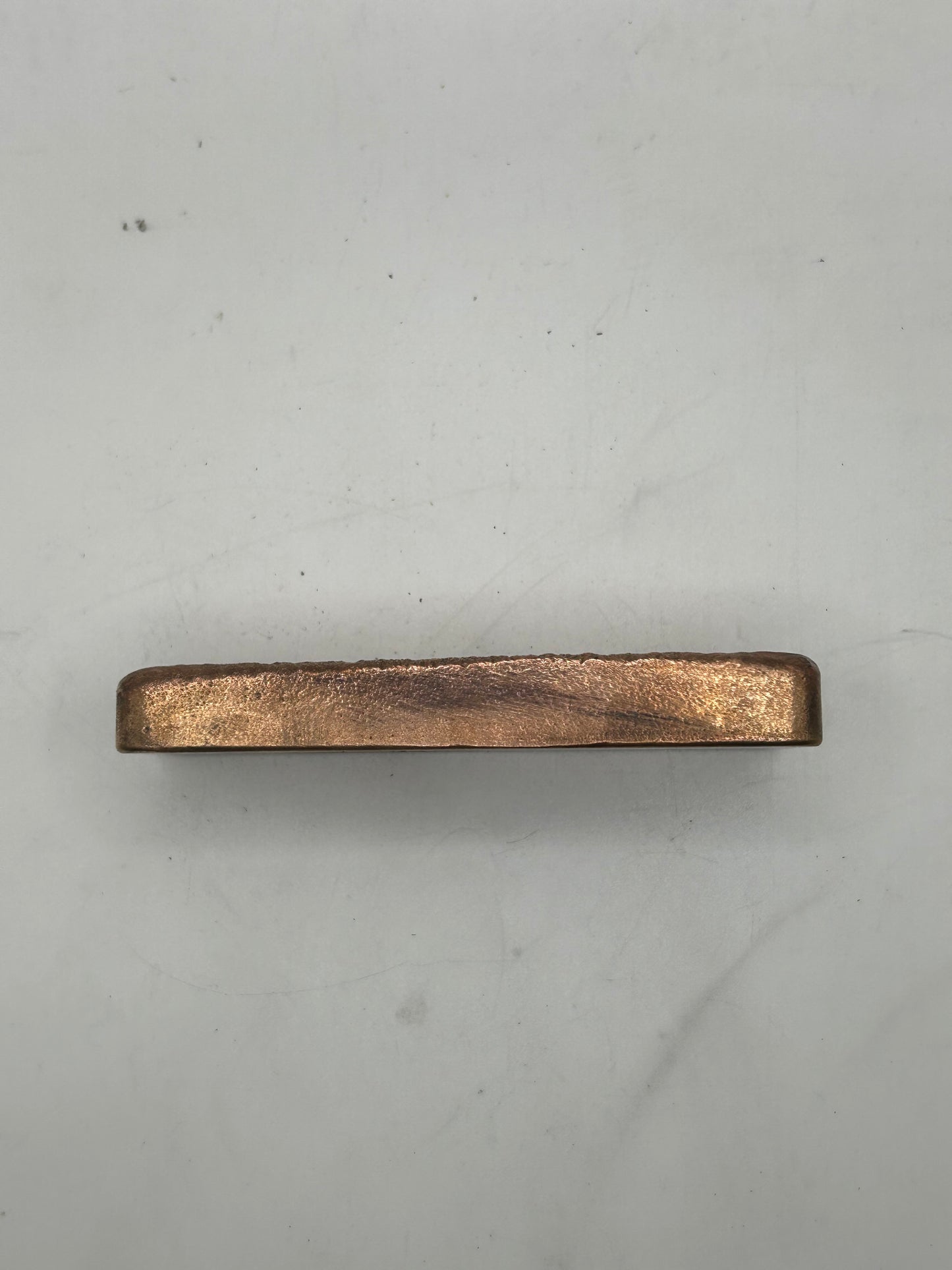
An alloy with even 1% gold by weight will be expensive, much less 10% gold by weight. And, since the original formula is unknown, I thought I’d make a less expensive modern version with the same lovely color as reported by the ancients, without breaking the bank. This is what I came up with! Mike’s Corinthian Bronze: it’s 4% silver, 5% tin, 1% antimony, 89.65% copper, 0.25% zirconium, and 0.1% phosphorus by weight. This alloy is in the “tin-bronze” alloy group. The silver serves to refine the grain of the alloy along with giving it a better polish and a composition more similar to that of the original. The tin is what is used to brighten the alloy and replace the gold that was in the original. The tin serves to increase strength, hardness, corrosion resistance, and ability to hold a mirror finish. The antimony helps reduce shrinkage upon cooling and gives it a unique hue, like a 50/50 mix of classic bronze and rose gold. The zirconium is a grain refiner as well as a degassing agent with the phosphorus serving the same roll. The phosphorus also makes the alloy more fluid when liquid and when combined with the reduced shrinkage, will make for an excellent choice for precision casting of jewelry or even bronze blades!
My Corinthian Bronze is a strong attractive material with a color traditionally thought of as bronze. The extra elements serve to improve mechanical properties along with the ease with which this material can be cast into complex shapes.